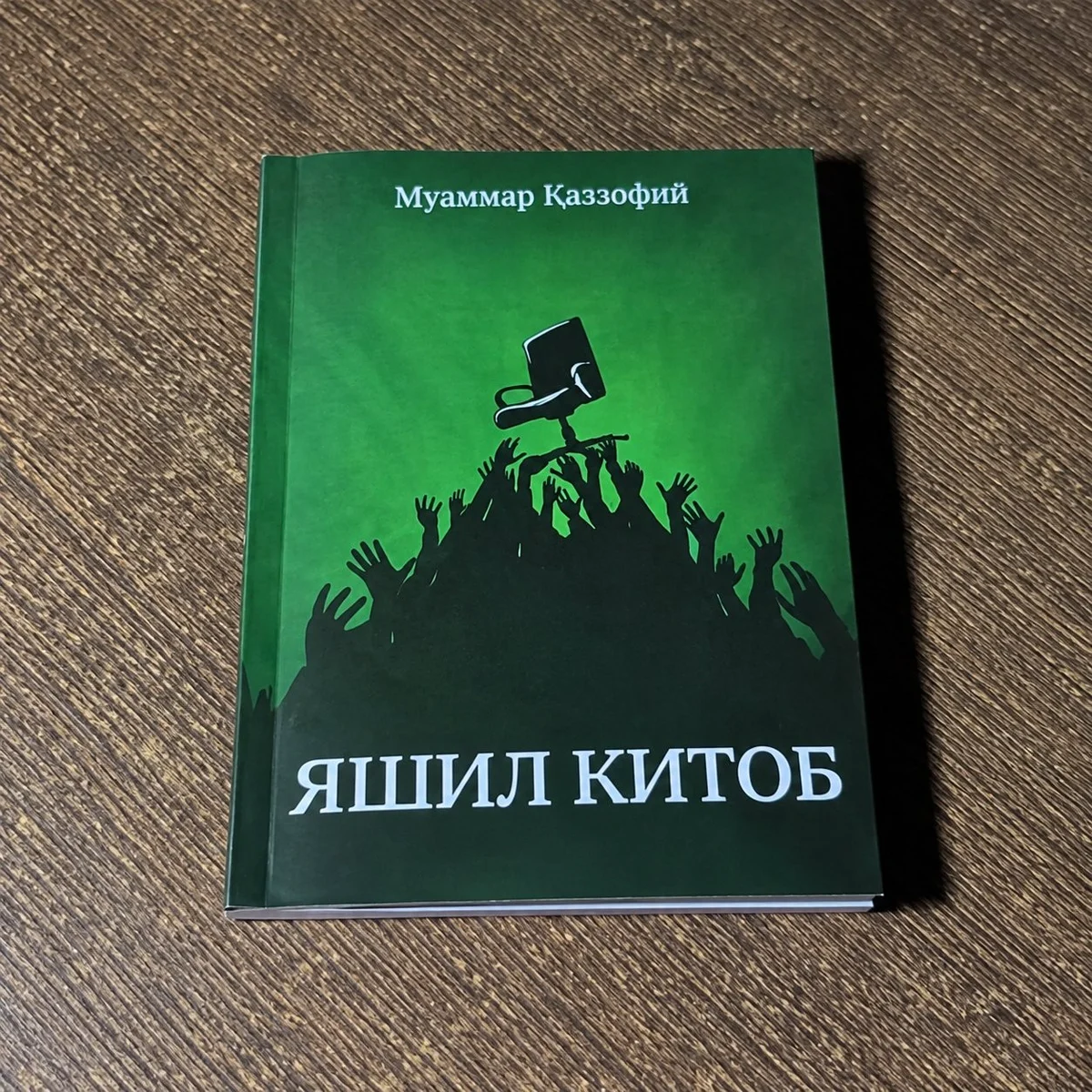
The Green Book: Muammar Gaddafi’s Political Philosophy and Views on Democracy and Society
139000 so'm
“The Green Book” is an important work of political philosophy written by former Libyan leader Muammar Gaddafi, bringing together his political, economic, and social views. It is not simply a history book, but a unique source offering an in-depth examination of the worldview of a leader who occupied a distinctive place on the global political stage during the second half of the 20th century. ✅ Origins and Structure of the Book “The Green Book” was initially published in installments beginning in 1975. Inspired by Mao Zedong’s “Little Red Book,” it was written in a simple, accessible style and features many memorable slogans. The work consists of three main parts intended to formulate Gaddafi’s “Third International Theory”: 🔹 Part One: “The Solution to the Problem of Democracy: The Authority of the People” (published in 1975). 🔹 Part Two: “The Solution to the Economic Problem: Socialism” (published in 1977). 🔹 Part Three: “The Social Basis of the Third International Theory” (published in 1981). ✅ A Critical Approach to Democracy and Parliamentarism In the first part of the book, Muammar Gaddafi sharply criticizes existing democratic systems, particularly parliaments and political parties. He condemns representative democracy as “capitalist” and “elitist” because, in his view, it does not reflect the true will of the people. Gaddafi proposes direct participation in government through “people’s congresses,” which are intended to ensure direct rule by the people. This section encourages readers to reconsider traditional political structures and reflect deeply on different forms of government. ✅ Economic Independence and Socialist Views The second part of “The Green Book” is devoted to finding solutions to economic problems, with Gaddafi proposing his own model of “socialism.” This model calls for land, production, and resources to be collectively owned. Rejecting both capitalism and communism, he promotes a distinctive approach known as “Islamic socialism.” These ideas offer a unique perspective on pressing issues such as economic justice, resource distribution, and the use of national wealth for the benefit of the people. The book gives readers a broader understanding of how economic systems affect society. ✅ Social Foundations and the “Third International Theory” The third part focuses on the social foundations of Gaddafi’s “Third International Theory.” It covers the foundations that make up society, the roles of the family, tribe, and nation, as well as the place of women and men in society. Here, the author presents his views on culture, traditions, and collective values. Through this section, Gaddafi seeks to provide a social foundation for his political and economic ideas, making it possible to understand his philosophy as a coherent whole. ✅ The Author’s Style and the Book’s Significance Muammar Gaddafi wrote “The Green Book” in simple, easy-to-understand language. His style is rich in short yet powerful statements and slogans, making the work accessible to a broad audience. The book served as the foundation of Gaddafi’s system of government in Libya, known as the “Jamahiriya” (“state of the masses”). It was not only widely distributed and studied in Libya—in schools and through radio and television—but also sparked discussion at universities internationally. ✅ Who Is This Book For? 🔹 Political science students and researchers: A valuable resource for studying alternative models of government and political theories. 🔹 History enthusiasts: Ideal for gaining a deeper understanding of the 20th-century political history of Libya and the Middle East, as well as the worldviews of former leaders. 🔹 Philosophy and sociology specialists: A resource for exploring unique philosophical ideas about the structure of society and the state. 🔹 General readers interested in global politics: Offers an opportunity to compare and analyze different political ideologies. ✅ Why Read It Now? In today’s globalized and complex world, understanding different political views and models of government is more important than ever. “The Green Book” serves as an important historical document for initiating debate about the shortcomings of political systems and potential alternatives. The work not only informs readers about past political experiments but also encourages critical thinking about contemporary issues of democracy and governance. Although it emerged within a distinctive historical context, some of the questions it raises remain relevant to modern society, including public participation, economic equality, and social justice. By reading this book, you will gain in-depth knowledge of Muammar Gaddafi’s personality, his influence on Libyan and regional politics, and the diverse currents of global political thought. “The Green Book” is more than just a political manifesto. It is a foundational work that reflects one of the major political and philosophical landscapes of the 20th century and, together with its controversies, demands careful analysis. Reading it will not only enrich your knowledge but also broaden your understanding of political processes.
Place an Order
Frequently Asked Questions (FAQ)
- Who wrote “The Green Book”?
- “The Green Book” was written by former Libyan leader Muammar Gaddafi.
- When was “The Green Book” published?
- The work was initially published in installments beginning in 1975. The first part was published in 1975, the second in 1977, and the third in 1981.
- What is the main idea of “The Green Book”?
- The book presents Muammar Gaddafi’s political philosophy. It criticizes traditional representative democracy, capitalism, and communism while proposing the “Third International Theory” (Third World Theory), based on direct rule by the people and a distinctive form of “Islamic socialism.”
- How many parts does “The Green Book” have?
- “The Green Book” consists of three main parts reflecting Muammar Gaddafi’s political, economic, and social views.
Customer Reviews
0 reviews- No reviews yet. Be the first to leave one!